The Control Trap: Why We Cling to Order When We’re Hurting
- JESSICA NICHOLE
- Apr 24
- 5 min read
I had an urge to write about something I’ve noticed lately: an underlying desire for perfection and control over my life. It’s something that connects deeply to my childhood.
I don’t know how young I was when it began, but I know it was early—somewhere around five or six. I was sitting in the bathtub and looked up at the three handles on the wall. Each had a letter written on it: C, W, H. As a kid, I assumed it stood for cold, warm, and hot, indicating which handles would adjust the temperature of the water.
As I sat there staring at each knob, I decided to give them names: Cathy, William, and Henry. They became my three best (imaginary) friends.
Every single night I would sit in that bathtub for hours—seriously, two to three hours—and my parents would pop in and out to check on me, making sure I was okay. They repeatedly asked what I was doing in there that took so long. I was talking to my best friends.
It started simply. Me telling them about my day at school. I would go into detail about every adventure. Over time, I transitioned from simply retelling my day to imagining revised versions of it. My stories no longer consisted of ups and downs. Instead, they became fantasies—versions of the truth that made my chest swell with pride.
Instead of Michael holding Britney’s hand at lunch, it became Michael had a crush on me, and I was bold enough to hold his hand at lunch.
Looking back now, I can see that my mind may have learned something very early: imagination, planning, and perfection could create emotional safety. The bathtub wasn’t just a bathtub. It became a private world where I could rewrite reality. In real life, things were unpredictable. In that inner world, I was admired, chosen, in control, and safe. I was a child creating a coping tool without even knowing it.
I know it’s a childhood fantasy, and it makes me giggle today just thinking about it. But it also makes me think about the woman I am today. A woman who still loves to daydream. A woman who still loves to plan every detail, be the first one at the party so I can choose exactly where I want to sit or stand, to look through copious amounts of photos and videos before selecting a restaurant to try. Because if I can curate the ideal version in my mind, then I’ll feel safer stepping outside my door and allowing the day to unfold.
What once protected me can also become a cage. The same childhood pattern can grow up and disguise itself as overplanning, needing the perfect choice, scanning for danger, or believing life must be carefully curated before it can be enjoyed. That isn’t vanity or weakness. It’s a nervous system trying to prevent pain before it happens.
What I’m starting to realize is that idealized perfectionism is also a form of control. Control over my life—but a false sense of control. Because everyone knows that once you step outside your four walls, anything can happen.
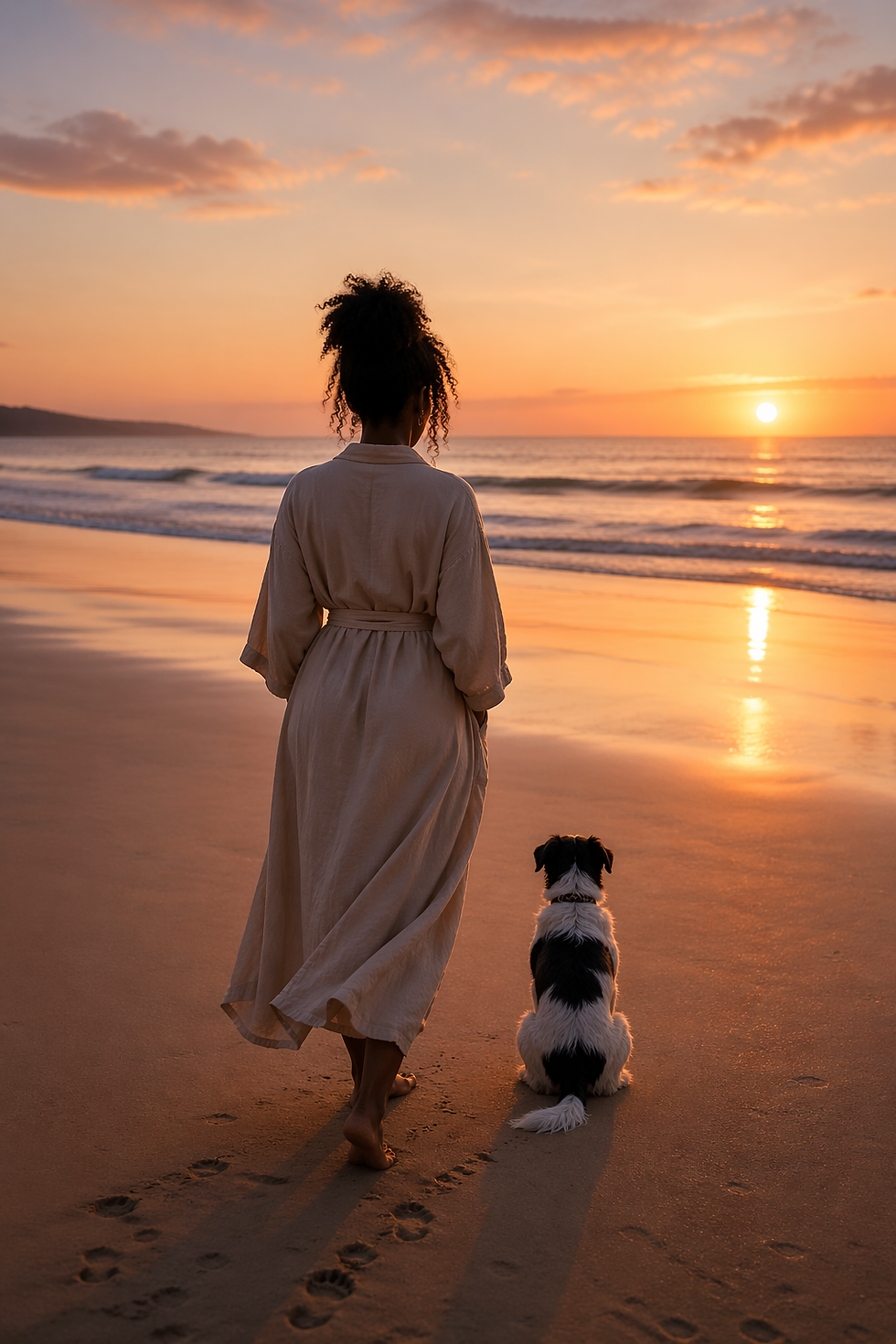
You could be walking down the street with your dog, playfully reciting affirmations in your mind, and then the next thing you know, you could be racing to the emergency room desperately trying to save your dog’s life, feeling like your whole world has been torn apart.
That’s what happened to me about three years ago.
And since then, I have learned that I cannot control the world around me. I’ve started to question whether authenticity and freedom are gifts that have been granted to me—or if they’re simply blessings other people get to enjoy while my job is to sit back and watch their lives unfold “perfectly” on social media.
That traumatic moment reinforced an old lesson: the world can change in one second. When something like that happens, control can feel even more necessary. PTSD can turn the brain into a bodyguard that never clocks out. It keeps asking the same question: How do we make sure nothing bad happens again?
In a recent session with my therapist, we discussed how that event reshaped my worldview. We’ve all experienced trauma in one way or another. Some moments linger for years. Others are brief. But they all remind us that the world isn’t perfect.
And for some of us, that lack of perfection creates a deep fear. A fear of the unknown. A fear of uncertainty. A fear of allowing others to get close. For me, it’s physical proximity that frightens me. It’s a fear of being harmed in a physical way. For others, it may be a fear of failure, a fear of flying, a fear of dating. The list goes on.
So we act out in ways that try to control the chaos. We try to predict the unknown. Because if we can predict it, we start to believe we can control it. Holding onto that control is what makes us believe we’re safe.
But healing begins when you realize safety and control are not the same thing. Control says nothing unexpected can happen. Real safety says something unexpected might happen, and I trust myself to handle it. That's where I am today, I'm trying to learn how to trust myself to handle it. Because that's the other thing that automatic event took from me it took away trust. Trust in myself and trust in the world around me.
What I’m starting to realize is that control offers temporary safety—but it doesn’t last, and it keeps us feeling trapped.
And that’s where my frustration has lived lately. In the anger and frustration of feeling stuck. Because the fear of releasing that control can feel far too great.
But if I can choose to take the risk, baby step by baby step, I start to come closer to a freedom and authenticity that feels liberating. It feels like a slow, long exhale.
That’s why freedom feels emotional to me. It isn’t just about being spontaneous. It’s about teaching my body that life does not need to be perfect to be beautiful, meaningful, or safe enough to live.
And that feeling is what I desire most of all. Not perfectionism. Not control. Those feel like survival.
Because that’s what PTSD does. It puts you in a state of perpetual survival mode. But surviving is not thriving. Surviving is not living.
I want to thrive. I want to live.
And when I close my eyes and allow myself to daydream—when I return to that safe world that exists inside my mind—that’s the Jessica I see. She moves through the world freely and authentically.
Maybe she was never a fantasy at all. Maybe she has always been the version of me underneath survival mode.
And that’s the place I’m hoping to return to.
Comments